Friday 28th March 2008
In this week's email: Carbisdale Castle Piping and Drumming, Family History at Glasgow's Mitchell Library, Enter The Dragon: Scottish Growth in China, Castles of Scotland - Caerlaverock Castle, Taming The Dragon, Dog Rescue Trainees - Glencoe, Scottish Tunes played on the Bagpipes, Politics Now.
Greetings from Glasgow on a somewhat damp and chillly day here! But let no more be said about that - on with this week's content!There's something of a Chinese theme this week. stv reporter, Cheryl Paul, has just returned from an amazing trip to China, where she was able to see how several Scottish companies are taking advantage of new opportunities there. Cheryl's series of short films in which she followed a Scottish trade delegation to China are being screened this week on stv. They are a fascinating insight into the way contemporary Scotland is reaching out globally and we thought Scotland on TV's audience would be interested in them too. We have two of Cheryl's films this week and there will be more next week.And, of course, details of all the new videos (apart from the daily news bulletins) are listed here to make it easier for you to find them! Happy viewing!
Carbisdale Castle Piping and Drumming Course
After years of exporting the pipes and drums all over the world, Scotland's home-grown bagpipers have been recently losing out in competition to overseas rivals. The country's top pipers feel it is time to get back to basics and concentrate on instructing the younger generations in order to regain the world crown. The College of Piping in Glasgow and the Ross and Cromarty Pipes and Drums School have joined forces to deliver a week-long piping and drumming Easter course at Carbisdale Castle, in Sutherland. The event is considered to be the biggest of its kind and expected to become a must on the Scottish piping calendar.
Family History at Glasgow's Mitchell Library - Part 6
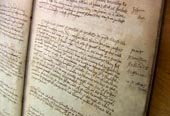
In the final episode of this series Dr. Irene O'Brien, senior archivist at the Mitchell Library, reveals more examples of the Glasgow Poor Law Archives held at the Library. She unveils two very different and intriguing stories and highlights all the useful information included in the applications. Notes revealing personal details such as nicknames, health history, family relatives, places of origin and even drawings made by the Poor Law authorities, help exemplify the unique and valuable information found in these archives. Finally, Irene explains how to search for any ancestors that may have applied for poor relief in Glasgow. The Mitchell has a database for Glasgow Poor Law that contains the names of over 500,000 poor relief applicants from the 1850's to 1920's. The database makes it much easier for family historians to locate their Poor Law ancestors and can be accessed by anyone visiting the library. Otherwise, the staff at the Mitchell Library can also organise for copies of the Poor Law applications upon request.
Enter The Dragon: Scottish Growth in China (Report 1)
As the spotlight on China intensifies in the run up to the Beijing Olympics, economic development chiefs say Scottish businesses cannot afford to ignore the country's increasing wealth. China has seen huge growth in recent years and Scottish firms have been quick to get a slice of the action. The area that Shanghai stands on was marshland as little as 15 years ago. The city's phenomenal growth demonstrates its rising economic might and that is something economic development chiefs say Scottish businesses simply cannot afford to ignore.
Castles of Scotland - Caerlaverock Castle
Caerlaverock Castle, stands guard over the Solway Firth, close to the border between Scotland and England. It is surrounded by a deep moat and acres of marshy willow woods, also known in Scotland as a "Moss". Shaped like a shield, the Castle has 3 sides to it with a tower at each corner. One of the towers, however, is a double tower and is so high, long and wide it encompasses the draw bridge leading into the castle under it.
Taming The Dragon: The story of one Scottish success (Report 2)
Jiaxing, to the south west of Shanghai, has always been prosperous, but opening up to the outside world in recent years has seen development soar. Kirriemuir firm J & D Wilkie took the brave step of setting up a factory in Jiaxing - a move born out of necessity. In China, the firm employs 30 staff and with a quarter of the costs of the UK, they are hoping to double production.
Dog Rescue Trainees - Glencoe
The Search and Rescue Dog Association (SARDA) held its annual assessment 3-day course at Glencoe. Trainee recruits looking to join Search and Rescue Dog teams across Scotland were put through their paces. This included a flight in a Royal Navy Sea-King Helicopter.SARDA has been training dogs to search and locate people for mountain rescue teams for over 40 years. This year, all the dogs on the course passed with flying colours, taking the number of canine rescue teams to 25.
3 Traditional Scottish Tunes Played on the Bagpipes
Louise Marshall Millington plays Tail Toddle, Scotland the Brave and The Atholl Highlanders on the bagpipes, at the Storytelling Centre in Edinburgh. Louise has been playing the bagpipes for over 25 years, and is devoted to promoting piping within Scotland. Her family, has travelled worldwide, providing entertainment and promoting Scotland's national instrument for over 50 years. For further information about Louise Marshall Millington, click here.
Politics Now
Thursday 27th March 2008 . Michael Crow and the Politics Now team examine the debate over Scotland's constitutional future. Michael is joined by Colin Fox, the Leader of the Scottish Socalist Party, in advance of his party's annual conference.David Martin MEP (Scottish Labour), Christine Grahame MSP (SNP, South of Scotland) and Bill Greig (Political Commentator) also join the Politics Now team, and discuss what else is making waves in Scottish Politics this week.
Showing posts with label history. Show all posts
Showing posts with label history. Show all posts
Friday, 11 April 2008


Tuesday, 25 March 2008
Scotland on TV Weekly News
Friday 21st March 2008
In this week's Newsletter: KILTS, SCOTTISH PRODUCE, FAMILY HISTORY , CASTLES.
Spring has officially sprung here in Scotland. Wednesday was the first day of spring, so, despite forecasts of snow for the Easter weekend ahead, we're celebrating the sunshine, spring flowers and lighter evenings.
We've been out and about looking for signs of new life in preparation for this Easter weekend in Glasgow. In Pollok Park on the Southside, the visiting baby animals are the star attraction, but Easter wouldn't be complete without eggs, so it's time to get creative with decorative paint too. The buds are on the trees in Glasgow's leafy West End, and the Botanic gardens is awash with the colour of daffodils, crocuses and blossoms - a promise of warmer days to come! A snapshot of spring in and around Glasgow can be found here.
So what better time to have a spring clean of our weekly newsletter. This is the new-look mailing. The links work in exactly the same way as the old one - just click onto the headers or images below. We hope you like it.
Happy Easter!
The Evolution of the Kilt
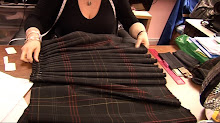
Geoffrey (Tailor) Kiltmakers. Howie Nicholsby explains how the kilt takes shape at the Edinburgh Old Town Weaving Company where, in the workshop, a small but industrious team of skilled kiltmakers hand-crafts every order. As Howie discusses, there is no substitute for good quality - a woollen kilt handcrafted in Scotland is the real McCoy and worth the investment as it will last a lifetime. Discussing the evolution of the kilt through the Geoffrey (Tailor) dynasty, Howie explains that times are changing in the industry, but his family's business are doing all they can to preserve this Scottish icon - from pushing for a recognised qualification to train kiltmakers, to working with the Scottish Government on a PGI - Protective Geographical Indicator - that will protect the 'Scottish' kilt in the future.
The First Minister Eats Scottish
First Minister, Alex Salmond, gives the five thirty show's Eat Scottish campaign a boost by pledging to eat only Scottish produce for a week. How will he fare during the many functions he attends? And - more importantly - will he manage a week without his favourite curry?
Discover Your Ancestors
With Glasgow's Mitchell Library. Dr Irene O'Brien, senior archivist at the Mitchell Library, shows us what she believes is the best resource for family historians held at the Mitchell Library: The Poor Law Archives. These are applications for poor relief made by residents of Glasgow and the West of Scotland during the 19th and 20th Century. The Glasgow City Archives and Special Collections at the Mitchell library holds more than 1 million of these applications. The Poor Law Archives provide unique information about the applicants, their families and their life, and can be an interesting and valuable source of information for the family historian. Usually, an application for relief contains detailed records of name, age, birthplace, marital status, religion, occupation, earnings, children, siblings and parents. Moreover, it also compiles detailed notes about the applicant and can even contain letters, certificates, newspapers cuttings and pictures, used by the poor law authorities to investigate each applicant. In part 5 of our series, Dr O'Brien reveals an example of a fraudulent poor law application that was investigated and solved by the authorities. The letters and notes contained in the application help to put together all the pieces of this dramatic puzzle.
Castles of Scotland: Fort George
From the stv archive this week, we have an episode from Castles of Scotland featuring the extraordinary Fort George.
Strategically situated on an isolated spit of land at Ardersier, near Inverness, Fort George was built by George II, following the 1746 Battle of Culloden. The Fort was designed to solve the threat posed by the possibility of further attacks from the Jacobites, and is still one of the most extensive artillery fortifications in Europe. This feature offers an historical tour through the Fort and its buildings, as well as an insight to the barracks built to accommodate more than a thousand soldiers.
Scottish RNLI Lifeboat
appears on a First Class Stamp. The heroics of a Scottish Western Isles RNLI Lifeboat crew have been immortalised on a new 1st class stamp. The Royal Mail has produced the stamp to recognise the heroics of the 28 men and women who make up the RNLI team in Barra and regularly risk their own lives to save others.
The stamp is one of six which make up the commemorative set which show actual rescues and training exercises from the Royal National Lifeboat Institution and the Maritime and Coastguard Agency. Since the island station in Barra opened in 1931, there have been more than 500 launches, and 412 lives have been saved.
Politics Now
Thursday 20th March 2008. Michael Crow presents stv's weekly look at Scottish politics. This week's guests in the studio are Wendy Alexander MSP, Lord O'Neill of Clackmannan, Colin Mackay and Denis R Sullivan.
Scottish Recipe: Herring
Scottish chef, John Quigley gives an oriental twist to one of Scotland's most historic fish - the herring. This week we have a healthy and creative recipe taken from stv's popular series Room at the Top. Nicknamed 'the silver darling', the herring provides an economic and nutritious source of food, and has been very important to the Scottish diet for many years. Being one of the most abundant fishes in the seas around Scotland, it also played a major part in developing a successful Scottish herring industry. The Scottish herring fishery has exported this fish all over the world for hundreds of years and even became, in the later 19th and early 20th century, one of the biggest fisheries in the world. Here, John Quigley uses fresh herring fillets to prepare a variation of a classic Rollmop with a nice oriental touch, and some sweet soy sauce cured herring.
To watch the video, click here. To read the written recipe, click here.
Alex Salmond Unveils Tartan Day Plans
The First Minister was at St Andrews this week, to unveil plans to sell Scotland to the United States and Canada. Alex Salmond was launching the programme for this year's Tartan Day and Scotland Week, which he said would showcase the country on the world stage. Later this month, events will take place across seven cities in North America, aimed at highlighting Scotland as a dynamic market with great investment potential. Mr Salmond said: "We're launching Scotland Week and Tartan Day. So we're trying to connect up the Tartan Celebrations, which are great, with the promotion of Scotland and that means the promotion of Scottish business, Scottish academia, the Homecoming Year next year, and Scottish culture. "These are all things which have a real resonance. We have to make sure we connect the celebration aspect with the hard nosed business aspect. We're trying to generate some business and jobs for our economy and that's what we're doing in an ambitious and cost effective programme next month."
In this week's Newsletter: KILTS, SCOTTISH PRODUCE, FAMILY HISTORY , CASTLES.
Spring has officially sprung here in Scotland. Wednesday was the first day of spring, so, despite forecasts of snow for the Easter weekend ahead, we're celebrating the sunshine, spring flowers and lighter evenings.
We've been out and about looking for signs of new life in preparation for this Easter weekend in Glasgow. In Pollok Park on the Southside, the visiting baby animals are the star attraction, but Easter wouldn't be complete without eggs, so it's time to get creative with decorative paint too. The buds are on the trees in Glasgow's leafy West End, and the Botanic gardens is awash with the colour of daffodils, crocuses and blossoms - a promise of warmer days to come! A snapshot of spring in and around Glasgow can be found here.
So what better time to have a spring clean of our weekly newsletter. This is the new-look mailing. The links work in exactly the same way as the old one - just click onto the headers or images below. We hope you like it.
Happy Easter!
The Evolution of the Kilt
Geoffrey (Tailor) Kiltmakers. Howie Nicholsby explains how the kilt takes shape at the Edinburgh Old Town Weaving Company where, in the workshop, a small but industrious team of skilled kiltmakers hand-crafts every order. As Howie discusses, there is no substitute for good quality - a woollen kilt handcrafted in Scotland is the real McCoy and worth the investment as it will last a lifetime. Discussing the evolution of the kilt through the Geoffrey (Tailor) dynasty, Howie explains that times are changing in the industry, but his family's business are doing all they can to preserve this Scottish icon - from pushing for a recognised qualification to train kiltmakers, to working with the Scottish Government on a PGI - Protective Geographical Indicator - that will protect the 'Scottish' kilt in the future.
The First Minister Eats Scottish
First Minister, Alex Salmond, gives the five thirty show's Eat Scottish campaign a boost by pledging to eat only Scottish produce for a week. How will he fare during the many functions he attends? And - more importantly - will he manage a week without his favourite curry?
Discover Your Ancestors
With Glasgow's Mitchell Library. Dr Irene O'Brien, senior archivist at the Mitchell Library, shows us what she believes is the best resource for family historians held at the Mitchell Library: The Poor Law Archives. These are applications for poor relief made by residents of Glasgow and the West of Scotland during the 19th and 20th Century. The Glasgow City Archives and Special Collections at the Mitchell library holds more than 1 million of these applications. The Poor Law Archives provide unique information about the applicants, their families and their life, and can be an interesting and valuable source of information for the family historian. Usually, an application for relief contains detailed records of name, age, birthplace, marital status, religion, occupation, earnings, children, siblings and parents. Moreover, it also compiles detailed notes about the applicant and can even contain letters, certificates, newspapers cuttings and pictures, used by the poor law authorities to investigate each applicant. In part 5 of our series, Dr O'Brien reveals an example of a fraudulent poor law application that was investigated and solved by the authorities. The letters and notes contained in the application help to put together all the pieces of this dramatic puzzle.
Castles of Scotland: Fort George
From the stv archive this week, we have an episode from Castles of Scotland featuring the extraordinary Fort George.
Strategically situated on an isolated spit of land at Ardersier, near Inverness, Fort George was built by George II, following the 1746 Battle of Culloden. The Fort was designed to solve the threat posed by the possibility of further attacks from the Jacobites, and is still one of the most extensive artillery fortifications in Europe. This feature offers an historical tour through the Fort and its buildings, as well as an insight to the barracks built to accommodate more than a thousand soldiers.
Scottish RNLI Lifeboat
appears on a First Class Stamp. The heroics of a Scottish Western Isles RNLI Lifeboat crew have been immortalised on a new 1st class stamp. The Royal Mail has produced the stamp to recognise the heroics of the 28 men and women who make up the RNLI team in Barra and regularly risk their own lives to save others.
The stamp is one of six which make up the commemorative set which show actual rescues and training exercises from the Royal National Lifeboat Institution and the Maritime and Coastguard Agency. Since the island station in Barra opened in 1931, there have been more than 500 launches, and 412 lives have been saved.
Politics Now
Thursday 20th March 2008. Michael Crow presents stv's weekly look at Scottish politics. This week's guests in the studio are Wendy Alexander MSP, Lord O'Neill of Clackmannan, Colin Mackay and Denis R Sullivan.
Scottish Recipe: Herring
Scottish chef, John Quigley gives an oriental twist to one of Scotland's most historic fish - the herring. This week we have a healthy and creative recipe taken from stv's popular series Room at the Top. Nicknamed 'the silver darling', the herring provides an economic and nutritious source of food, and has been very important to the Scottish diet for many years. Being one of the most abundant fishes in the seas around Scotland, it also played a major part in developing a successful Scottish herring industry. The Scottish herring fishery has exported this fish all over the world for hundreds of years and even became, in the later 19th and early 20th century, one of the biggest fisheries in the world. Here, John Quigley uses fresh herring fillets to prepare a variation of a classic Rollmop with a nice oriental touch, and some sweet soy sauce cured herring.
To watch the video, click here. To read the written recipe, click here.
Alex Salmond Unveils Tartan Day Plans
The First Minister was at St Andrews this week, to unveil plans to sell Scotland to the United States and Canada. Alex Salmond was launching the programme for this year's Tartan Day and Scotland Week, which he said would showcase the country on the world stage. Later this month, events will take place across seven cities in North America, aimed at highlighting Scotland as a dynamic market with great investment potential. Mr Salmond said: "We're launching Scotland Week and Tartan Day. So we're trying to connect up the Tartan Celebrations, which are great, with the promotion of Scotland and that means the promotion of Scottish business, Scottish academia, the Homecoming Year next year, and Scottish culture. "These are all things which have a real resonance. We have to make sure we connect the celebration aspect with the hard nosed business aspect. We're trying to generate some business and jobs for our economy and that's what we're doing in an ambitious and cost effective programme next month."
Tuesday, 18 March 2008
Scotland on TV Weekly News
Friday 14th March 2008
Scotland is becoming more and more of a destination for weekend breaks - be that for golf, a spot of whisky-tasting, some retail therapy or to enjoy Scotland's fantastic landscape and visitor attractions. More and more airlines are offering direct routes to Scotland from around the UK, Europe and further afield so we've decided to explore some of the essential travel information visitors might need. As many of the short-haul flights come into Glasgow Prestwick, that's where we've started. That video and links to all this week's new videos can be found below. This week we've the next instalments from the Mitchell Library, Edinburgh Old Town Weaving Company and the Army School of Bagpipe Music and Highland Drumming.
FAMILY HISTORY AT THE MITCHELL LIBRARY - Part 4
The Glasgow City Archives at the Mitchell Library include some really interesting collections for the Scottish family historian. This week, Dr Irene O’Brien, senior archivist at the Mitchell Library, reveals more of the useful resources available to anyone wishing to find out more about their Scottish ancestors. Dr O’Brien explains the Church Archives, which include large numbers of baptismal registers from before 1855, as well as the family and estate archives, which provide information on the landed families and their tenants. Finally, Irene reveals another fascinating resource, the Kirk Session Minutes. The Kirk Session was composed of elders of the church and was responsible for the administration of church affairs in each parish. The Session kept records and investigated many different kinds of offences including witchcraft and theft.
Discover:Ancestors
MORAG OF DUNVEGAN & THE SKYE BOAT SONG
Another rehearsal performance by the pipe band from the Army School of Bagpipe Music and Highland Drumming in Edinburgh. This week, the band rehearses two Scottish traditional tunes: Morag of Dunvegan, a traditional Scottish air, and The Skye Boat Song, which recalls the escape of Bonnie Prince Charlie after his defeat at Culloden in 1746. The lyrics are believed to have been written by Sir Harold Boulton to an air collected by Miss Annie MacLeod in the 1870s.
Experience:Bagpipes
PRESTWICK INTERNATIONAL AIRPORT to Glasgow
Getting to Glasgow from Prestwick International Airport is so easy, even Richard from our Scotland on TV team can do it! This video guide shows how to travel from Prestwick to Glasgow Central Station, using the SPT train service from Prestwick International Airport railway station. The train journey will take around 45 minutes from Prestwick to Glasgow, and this guide will show you how to get to the station directly from the airport. The train station is serviced by trains running between Glasgow Central and Ayr - a Glasgow-bound train passing by the station roughly every half an hour Mondays to Saturdays, and hourly on Sundays. Additional information is available from screens on the platforms, and a call button which can be pressed. On the route to Glasgow Central Station, you will pass through the following stations: Prestwick International AirportTroon (with golf course views)BarassieIrvineKilwinning (Interchange station)GlengarnockPaisley Gilmour StreetGlasgow Central (where it terminates)Happy travelling!
Discover:Visit
A VIEW FROM LEITH DOCKS
As the main seaport for Edinburgh, Leith's docks have played a major role in the history of Scotland’s capital. Situated just north of the city on the Firth of Forth, this area is slowly transforming itself, after years of industrial decline left it a shadow of its former self. Luxury residential developments are now springing up, offering panoramic views across the water to Fife, but older features like the sheltered haven of Newhaven Quay still remain. Scotland on TV visited Leith on a bright spring day and braved the fresh northerly breeze. In this view, we move from the harbour to look out across the Firth of Forth, and then to the docks (now called Ocean Terminal), where the Royal Yacht Britannia is moored.
Discover:See Scotland
EXHIBITION AT THE QUEEN'S CROSS CHURCH
Scottish artists, Dai and Jenny Vaughan have recently exhibited their gesso (pronounced jess-oh) panels at the Charles Rennie Mackintosh Church in Glasgow. Inspired by The Seven Princesses, a piece of gesso work originally produced by Margaret Macdonald Mackintosh in 1906, this commissioned art work was exhibited in the historic Glasgow church. The original gesso panels were commissioned by Fritz Warndorfer, for his music Room in Vienna. Margaret and her husband, Charles Rennie Mackintosh, designed the panel especially for Fritz in 1902. The panel represents the play The Seven Princesses, a work written by Maurice Maeterlink who was one of the Mackintoshes' favourite authors. Gesso is an artist's medium made up primarily of Plaster of Paris and its use dates back as far as ancient Egyptian times, when it was used to prepare wooden panels for painting from about 2000BC. For more information on Margaret Macdonald Mackintosh and her work, or to order prints, visit http://www.art-works.co.uk/
Discover:Culture
A SHORT HISTORY OF TARTAN - The Edinburgh Old Town Weaving Company
With over 200 clan and family tartans, as well as bespoke patterns, woven on the premises, the Edinburgh Old Town Weaving Company is the busiest working weaving mill left in the city. Having walked and talked us through the tartan weaving process last week, we continue our series with Howie Nicholsby of the Geoffrey (Tailor) dynasty, and hear his thoughts on the history of tartan itself: that fabric so distinctly Scottish. Or so many of us believe… Woven woollen material like tartan and tweed may have its place in Scottish history, but the muted colours our ancestors wore are a far cry from the vibrant colours of ‘tartan’ we know today, itself a product of the Industrial Revolution and Victorian Age. Howie is certainly the man in the know when it comes to traditions changing through the ages - next week we look at the kilt making process, and also how Howie, with his company 21st Century Kilts, has evolved this Scottish icon into a modern fashion.
Experience:Kilts
FROM THE ARCHIVESCOTLAND'S LARDER - The Taste of Tain
Catherine Brown is in Tain where she visits a scampi factory and a traditional bakery, and David More shares with us the inner secret of a good Scotch pie. Later, Catherine uses the produce from the Tain farmers market to demonstrate how to liven up root vegetables plus how to cook a lamb steak stew. And a visit to a local farmer enlightens Catherine to what makes a happy hen.
Experience:Food
POLITICS NOW - Thursday 13th March, 2008
This week, Michael Crow examines Alex Salmond's handling of Donald Trump’s Golf Resort application with MSPs Bob Doris and Des McNulty. The debate over the government’s extension of electronic tagging is also discussed. Also debated in this episode are Alistair Darling’s first budget, a controversial scheme allowing MSPs to use public money to buy second homes in Edinburgh, and the possibility of replacing the Council Tax with a local income tax.
Subscribe to:
Posts (Atom)